Here's one you may have thought you knew, but now it's been confirmed: African American adults are more likely than whites to miss sleep, according to a new study, with the gap especially wide for black professionals.
The study, from the Harvard School of Public Health, focused on "short sleepers." Those are adults who routinely get less than seven hours of sleep per night. Short sleepers make up 29% of the population as a whole, but the practice is more common (37%) among blacks than whites (28%) in a nationally representative survey of 136,815 men and women, published in the American Journal of Epidemiology.
Researchers don't know why the gap exists, but they are concerned. Sleeping less than seven hours per night is linked with higher risk of early death and problems with obesity, high blood pressure and diabetes. Since African Americans also suffer higher mortality rates in all these health concerns, it's a "chicken and egg" question that could keep one up at night.
Sleep tips and advice for insomniacs in the randomly written blog of the author of The Great Sleep Checklist, available on Amazon.com.
Tuesday, December 31, 2013
Sunday, December 29, 2013
2014: A Year in Great Sleep Research
2013 was a great year for learning about sleep, our brains and how sleep affects our well-being. Many of us already think we know the answer: "Ugh. My life sucks without enough sleep and I feel terrible. I wander around in a funk and am completely unproductive."
Yes, all true, but let's take a quick review of what researchers learned as it pertains to sleep and see if there's anything new there to benefit us.
First and foremost of the sleep and brain studies was data showing our brains use sleep to eliminate garbage. That's right. During sleep, the brain rids itself of waste.
Here's the thing: scientists have known for years that the brain doesn't directly use the lymphatic system (the body's main filter and waste dumping system) to eliminate its toxic waste. Instead, our sleeping mind uses cerebrospinal fluid (CSF) to flush out neurotoxins via pathways separate from the lymphatic system. And by the way, we may find out this is important to avoiding the plague of our seniors, because among the toxins flushed is beta amyloid, which is a protein identified as related to Alzheimer's Disease.
Added to this information in 2013, the discovery by researchers (led by University of Rochester neurosurgeon Maiken Nedergaard) of "hidden caves" that open in the brain while we sleep, allowing the cerebrospinal fluid to flush neurotoxins out through the spinal column.
This research may mean failing to get enough sleep isn't just annoying, doesn't just make you grumpy; it also may be a factor in developing neurological disorders, such as Alzheimer's Disease, which of course, we are all desperate to avoid. If you want to stay in your right mind, give your mind the chance to right itself by flushing out toxins with regular sleep.
Stress is also a huge factor in a healthy night's rest and health in general, as we all know, but in 2013, it was confirmed as a factor in cancer growth and recovery.
The research here didn't show that stress causes cancer, but according to the study by Wake Forest Baptist Medical Center, once cancer has taken hold, stress biochemically feeds the growth of cancerous cells. The study was done using prostate cancer in mice, but it has implications for all cancers in other organisms, such as you and me.
No studies on this, but pretty sure we all agree that if you get more sleep, you'll cope with your stress better.
I saved the easiest-to-swallow information for last: coffee, chocolate and the caffeine link.
I'm not a coffee drinker myself, but let's look at the research. And there's a plethora of it. "Coffee is good for you!" "Coffee is bad for you." "Two cups a day will stunt your growth." "Anything more than two cups a day may be addictive." Researchers seem to love to talk about the morning cup as much as some people like to drink it.
But in 2013, Harvard School of Public Health did a meta-review. You know what that is, right? A review of the data collected during other studies that shows or leads to entirely other helpful or dark conclusions. This particular meta-study was a look back at three extensive U.S. health studies that included 43,599 men and 164,825 women to find that coffee accounted for the 71% of caffeine consumed.
Then they looked at causes of death during the study period: 277 suicides.
The analysis found the risk of suicide among adults drinking 2-4 cups of coffee (400 mg of caffeine) was 50% lower than for adults drinking decaffeinated coffee, or one cup or less of caffeinated coffee. Over-serving, drinking more than 4 cups of coffee, didn't further decrease the suicide risk. The study didn't note whether the average 4+cup caffeine addicts would make one feel like a rat in a maze.
By the way, the caffeine makes sense, because it's mimicking a brain chemical called adenosine that acts as a "checks and balances" chemical made by neurons as they fire throughout the day. Producing adenosime or drinking caffeine helps the nervous system to ratchet down activity, until we eventually fall asleep and then, about 8 hours later, we reboot.
Using the science to our own benefit can only be the smart thing to do, particularly as it relates to sleep and the brain. And hopefully, we'll all sleep better in 2014.
Yes, all true, but let's take a quick review of what researchers learned as it pertains to sleep and see if there's anything new there to benefit us.
First and foremost of the sleep and brain studies was data showing our brains use sleep to eliminate garbage. That's right. During sleep, the brain rids itself of waste.
Here's the thing: scientists have known for years that the brain doesn't directly use the lymphatic system (the body's main filter and waste dumping system) to eliminate its toxic waste. Instead, our sleeping mind uses cerebrospinal fluid (CSF) to flush out neurotoxins via pathways separate from the lymphatic system. And by the way, we may find out this is important to avoiding the plague of our seniors, because among the toxins flushed is beta amyloid, which is a protein identified as related to Alzheimer's Disease.
Added to this information in 2013, the discovery by researchers (led by University of Rochester neurosurgeon Maiken Nedergaard) of "hidden caves" that open in the brain while we sleep, allowing the cerebrospinal fluid to flush neurotoxins out through the spinal column.
This research may mean failing to get enough sleep isn't just annoying, doesn't just make you grumpy; it also may be a factor in developing neurological disorders, such as Alzheimer's Disease, which of course, we are all desperate to avoid. If you want to stay in your right mind, give your mind the chance to right itself by flushing out toxins with regular sleep.
Stress is also a huge factor in a healthy night's rest and health in general, as we all know, but in 2013, it was confirmed as a factor in cancer growth and recovery.
The research here didn't show that stress causes cancer, but according to the study by Wake Forest Baptist Medical Center, once cancer has taken hold, stress biochemically feeds the growth of cancerous cells. The study was done using prostate cancer in mice, but it has implications for all cancers in other organisms, such as you and me.
No studies on this, but pretty sure we all agree that if you get more sleep, you'll cope with your stress better.
I saved the easiest-to-swallow information for last: coffee, chocolate and the caffeine link.
I'm not a coffee drinker myself, but let's look at the research. And there's a plethora of it. "Coffee is good for you!" "Coffee is bad for you." "Two cups a day will stunt your growth." "Anything more than two cups a day may be addictive." Researchers seem to love to talk about the morning cup as much as some people like to drink it.
But in 2013, Harvard School of Public Health did a meta-review. You know what that is, right? A review of the data collected during other studies that shows or leads to entirely other helpful or dark conclusions. This particular meta-study was a look back at three extensive U.S. health studies that included 43,599 men and 164,825 women to find that coffee accounted for the 71% of caffeine consumed.
Then they looked at causes of death during the study period: 277 suicides.
The analysis found the risk of suicide among adults drinking 2-4 cups of coffee (400 mg of caffeine) was 50% lower than for adults drinking decaffeinated coffee, or one cup or less of caffeinated coffee. Over-serving, drinking more than 4 cups of coffee, didn't further decrease the suicide risk. The study didn't note whether the average 4+cup caffeine addicts would make one feel like a rat in a maze.
By the way, the caffeine makes sense, because it's mimicking a brain chemical called adenosine that acts as a "checks and balances" chemical made by neurons as they fire throughout the day. Producing adenosime or drinking caffeine helps the nervous system to ratchet down activity, until we eventually fall asleep and then, about 8 hours later, we reboot.
Using the science to our own benefit can only be the smart thing to do, particularly as it relates to sleep and the brain. And hopefully, we'll all sleep better in 2014.
Thursday, December 26, 2013
Holiday Season Insomnia?
Fall and Winter usually help people to improve their sleep habits. The cooler temperatures, longer nights and shorter days are great for celebrating holidays, eating too much, exercising less and sleeping more. Turkey served at several meals is always good for a few extra Zzz's.
The holidays are also good for stories about subjects like sleep. Here's an interview I did with Sandy Hausman of Virginia Public Radio:
Virginia Author hopes her book will "Put You to Sleep."
Happy Holidays and, now that they're almost over, get some rest!
The holidays are also good for stories about subjects like sleep. Here's an interview I did with Sandy Hausman of Virginia Public Radio:
Virginia Author hopes her book will "Put You to Sleep."
Happy Holidays and, now that they're almost over, get some rest!
Wednesday, November 27, 2013
Give Thanks for Great Sleep
Tomorrow is Thanksgiving: time to come together with family and friends, give thanks and express gratitude for what you have (and sometimes what you don't have), and eat an unusually ornate meal.

Since most of us make a tradition of overeating (and regretting it) on this holiday, what can you do to lower the chances that you'll over-indulge and feel uncomfortable, both physically and mentally? Get a good night's sleep.
Why? Because surveys show people who are under-tired, are more likely to overeat. Maybe we overeat because we're so tired that we think we need a little comfort, or perhaps we do it because exhaustion doesn't help us make good decisions. For whatever reason, we eat more when tired. And very few of us are going to get exercise, beyond a light game of touch football (or hoisting feet on the ottoman for football on TV after the meal).
Sleep will help you get through the meal preparation, whether that's actual cooking or helping keep other guests out of the cook's way. It helps keep people on an even keel, which is often tough to do on these big family occasions. It's important to everyone's well-being. We all know that.
Even better news, it is the best time of the year to get a good night's sleep. Summer's heat has gone. The worst worries about "what am I waking up to" are yet to come. The rain and, in some cases soggy snow, always seem to help me sleep in a way that bitter cold does not.
So remember the basics: go to bed at the same time every night. Sleep in a cool, dark room. Turn off the tech at least an hour (two is better) before you turn in. Sleep on a good mattress. Check those pillows to see if they need replacing. Oh! We'll talk about that next time!
Since most of us make a tradition of overeating (and regretting it) on this holiday, what can you do to lower the chances that you'll over-indulge and feel uncomfortable, both physically and mentally? Get a good night's sleep.
Why? Because surveys show people who are under-tired, are more likely to overeat. Maybe we overeat because we're so tired that we think we need a little comfort, or perhaps we do it because exhaustion doesn't help us make good decisions. For whatever reason, we eat more when tired. And very few of us are going to get exercise, beyond a light game of touch football (or hoisting feet on the ottoman for football on TV after the meal).
Sleep will help you get through the meal preparation, whether that's actual cooking or helping keep other guests out of the cook's way. It helps keep people on an even keel, which is often tough to do on these big family occasions. It's important to everyone's well-being. We all know that.
Even better news, it is the best time of the year to get a good night's sleep. Summer's heat has gone. The worst worries about "what am I waking up to" are yet to come. The rain and, in some cases soggy snow, always seem to help me sleep in a way that bitter cold does not.
So remember the basics: go to bed at the same time every night. Sleep in a cool, dark room. Turn off the tech at least an hour (two is better) before you turn in. Sleep on a good mattress. Check those pillows to see if they need replacing. Oh! We'll talk about that next time!
Thursday, October 17, 2013
Can the Right Pajamas Help You Sleep?
What do you wear to bed? I think for most of us, the nightwear depends on what sort of bedtime activity we're expecting.
Seems obvious, doesn't it? Going to bed for other than sleep? We all know that makes for more exciting sleepwear. Or none. New partner? Very exciting. Long-time couple? Very exciting, too, if it's a big occasion. Otherwise, you've probably developed your own style and tastes that are known.
But what type of pajamas would help you enhance sleep: a flannel nightie, the favorite t-shirt and shorts, a sweet cotton cammi-set or nothing at all? Get set for a surprise, because if you're like me, this was not what came to mind.
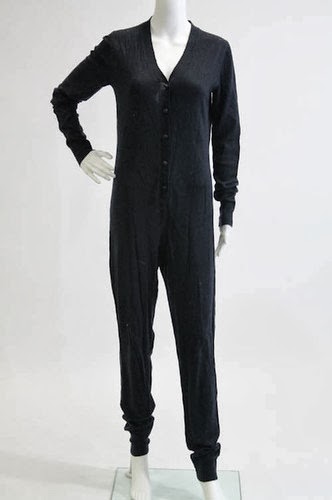
According to a new study being presented today in Australia, pajamas made of a light wool are best for a sound, deep and longer sleep. You weren't expecting that one, were you? Turns out they have problems sleeping down under, as well.
The choices reviewed by the researcher were cotton, synthetic material, lightweight wool and nude.
Sydney University's Mirim Shin found people fall sleep and stay asleep best in light-weight, long-sleeved wool nightclothes. Shin said such pajamas have better insulation and absorption qualities than cotton.
Why would you need such insulation? The research also found an ambient temperature of 17 degrees Celsius (62 degrees Fahrenheit) was better than 22 C (72 F) which is where I sleep best. Although I haven't actually tried the lower temp. I might just give that a try this winter.
But where to find them? The trend has been lightweight cotton or silk pajamas for so long that I had to google around, looking for this set of pajamas:
I found them here on Ebay.com. Reminds me of a pair of long woolen red underwear that a boyfriend once gave me for Christmas as a joke. Except these cost less and are significantly better looking, to be honest.
The best part of this research? According to researcher Shin, the beauty of her finding is that night clothes are easy to modify. You can certainly change your pajamas a lot easier than you can alter your behavior, sleeping position or oh, well, your partner's behavior at night. And maybe in doing so, you might get to great sleep!
Seems obvious, doesn't it? Going to bed for other than sleep? We all know that makes for more exciting sleepwear. Or none. New partner? Very exciting. Long-time couple? Very exciting, too, if it's a big occasion. Otherwise, you've probably developed your own style and tastes that are known.
But what type of pajamas would help you enhance sleep: a flannel nightie, the favorite t-shirt and shorts, a sweet cotton cammi-set or nothing at all? Get set for a surprise, because if you're like me, this was not what came to mind.
According to a new study being presented today in Australia, pajamas made of a light wool are best for a sound, deep and longer sleep. You weren't expecting that one, were you? Turns out they have problems sleeping down under, as well.
The choices reviewed by the researcher were cotton, synthetic material, lightweight wool and nude.
Sydney University's Mirim Shin found people fall sleep and stay asleep best in light-weight, long-sleeved wool nightclothes. Shin said such pajamas have better insulation and absorption qualities than cotton.
Why would you need such insulation? The research also found an ambient temperature of 17 degrees Celsius (62 degrees Fahrenheit) was better than 22 C (72 F) which is where I sleep best. Although I haven't actually tried the lower temp. I might just give that a try this winter.
But where to find them? The trend has been lightweight cotton or silk pajamas for so long that I had to google around, looking for this set of pajamas:
I found them here on Ebay.com. Reminds me of a pair of long woolen red underwear that a boyfriend once gave me for Christmas as a joke. Except these cost less and are significantly better looking, to be honest.
The best part of this research? According to researcher Shin, the beauty of her finding is that night clothes are easy to modify. You can certainly change your pajamas a lot easier than you can alter your behavior, sleeping position or oh, well, your partner's behavior at night. And maybe in doing so, you might get to great sleep!
Tuesday, October 8, 2013
Sleep: How Much Is Too Much?
You're reading this at 2 or 3 o'clock in the morning, as your having "one of those" difficult times, aren't you? So at this point, you probably can't imagine the possibility of getting too much sleep. But it can happen and it also has negative health effects.
The federal government's Centers for Disease Control and Prevention just released a new study on our favorite topic, sleep, in the October issue of the journal Sleep, showing that in fact, too much sleep has health consequences. But here's the surprise: the
Too little sleep and you're groggy, mentally absent, struggling to take care of your physical needs of exercise and generally grumpy. That's the easy stuff.
You're also at risk for coronary heart disease, stroke, diabetes, obesity and mental distress. Sounds like a description of the ills of modern life, doesn't it?
To get their results, CDC researchers examined data on more than 54,000 people ages 45 and above in 14 states. They found the vast majority (65%) were "optimal sleepers," getting 6 to 9 hours of sleep per night. About one third (31%) were "short sleepers," getting 6 hours or less per night. Only a small percentage (4%) were "long sleepers" who slept an average of 10 hours or more per night. No surprises there, right?
We already know what happens to the short sleepers: stressed out, heart and blood pressure issues, "Little Mr. Cranky Pants" at the office. But what is surprising is, they found the same chronic illnesses among the "long sleepers," except links with coronary heart disease, stroke and diabetes were even stronger.
Dr. M. Safwan Badr, president of the American Academy of Sleep Medicine (AASM), says the evidence is clear:
"Sleeping longer doesn't necessarily mean you're sleeping well."
He says people should understand that sleep affects health: a healthy, balanced lifestyle is not just about following a good diet and staying fit, but also getting the right quantity and quality of sleep.
Study co-author Dr. Janet B. Croft, a senior chronic disease epidemiologist in the Division of Population Health at the CDC, recommends doctors looking after chronically ill people begin with questions, regarding their mental health, body weight and sleep patterns and quality.
Have you noticed any of these issues in your life, as you deal with your sleeping patterns?
The federal government's Centers for Disease Control and Prevention just released a new study on our favorite topic, sleep, in the October issue of the journal Sleep, showing that in fact, too much sleep has health consequences. But here's the surprise: the
Too little sleep and you're groggy, mentally absent, struggling to take care of your physical needs of exercise and generally grumpy. That's the easy stuff.
You're also at risk for coronary heart disease, stroke, diabetes, obesity and mental distress. Sounds like a description of the ills of modern life, doesn't it?
To get their results, CDC researchers examined data on more than 54,000 people ages 45 and above in 14 states. They found the vast majority (65%) were "optimal sleepers," getting 6 to 9 hours of sleep per night. About one third (31%) were "short sleepers," getting 6 hours or less per night. Only a small percentage (4%) were "long sleepers" who slept an average of 10 hours or more per night. No surprises there, right?
We already know what happens to the short sleepers: stressed out, heart and blood pressure issues, "Little Mr. Cranky Pants" at the office. But what is surprising is, they found the same chronic illnesses among the "long sleepers," except links with coronary heart disease, stroke and diabetes were even stronger.
Dr. M. Safwan Badr, president of the American Academy of Sleep Medicine (AASM), says the evidence is clear:
"Sleeping longer doesn't necessarily mean you're sleeping well."
He says people should understand that sleep affects health: a healthy, balanced lifestyle is not just about following a good diet and staying fit, but also getting the right quantity and quality of sleep.
Study co-author Dr. Janet B. Croft, a senior chronic disease epidemiologist in the Division of Population Health at the CDC, recommends doctors looking after chronically ill people begin with questions, regarding their mental health, body weight and sleep patterns and quality.
Have you noticed any of these issues in your life, as you deal with your sleeping patterns?
Sunday, September 8, 2013
Time to Improve Your Sleep
Sleepless in... Seattle? And Spain. And Serbia. And Salt Lake City. And even San Diego.
An international sleep study is in and shows we're struggling to shut our eyes and keep them shut. Americans are the most productive, successful and honored for their success people in the world. But among the rewards, sleep is missing from the list.
In the first ever international sleep study by the National Sleep Foundation, researchers asked a variety of questions about different sleep patterns. They found the Japanese survive on the smallest amount of sleep per night: just six hours and 22 minutes.
Here in the U.S., we weren't far behind. We sleep an average of six hours and 31 minutes per night. According to the NSF, we need seven to eight hours of nightly sleep, in order to avoid the damaging effects of sleep deprivation, such as increased risk of stroke, diabetes, and well, exhaustion.
Isn't it time we started to sleep better? Recovering from insomnia is a process and may take some time, but it can be done.
So try this sleep tip: make sure your room is very dark. Blackout curtains are inexpensive and bonus: they are energy efficient, blocking the summer's hot rays of the sun and keeping in the heat in the winter. Also turn off the "vampire" electricity devices. Anything that is shining an LED light (like the clock shown above) or putting off heat to the touch is using energy. And the bright ones may be keeping you awake.
Isn't it time we started to sleep better? Recovering from insomnia is a process and may take some time, but it can be done.
So try this sleep tip: make sure your room is very dark. Blackout curtains are inexpensive and bonus: they are energy efficient, blocking the summer's hot rays of the sun and keeping in the heat in the winter. Also turn off the "vampire" electricity devices. Anything that is shining an LED light (like the clock shown above) or putting off heat to the touch is using energy. And the bright ones may be keeping you awake.
Subscribe to:
Posts (Atom)