Showing posts with label Great Sleep Checklist. Show all posts

Wednesday, March 5, 2014

In Pursuit of Sleep...

What does it take to get great sleep?  It takes comfort, a chilled room, a calm mind, no sugar and consistency.  Let's talk about that last factor.

Consistency is the best friend of every Great Sleeper.  You need to be going to bed at the same time, getting up at the same time, eating at the same time.  You have to commit to yourself that sleep is important to your health and that your health is vital to your happiness.

At some point in your life, you left home and started eating ice cream for dinner every night.  Many of us had that first taste of freedom in college.  The joy in that experience lasted for about one week, maybe two if we really liked ice cream and weren't smart enough to notice the effects on how our bodies felt.  But the point is, it's over now.

The rest isn't a lot different.  When you go read and apply "The Great Sleep Checklist,"  you are looking to eliminate the other "ice cream factors" in your life.  If you're going to start sleeping better, it'll take about that level of discipline.  You'll try to get to bed at the same time every night.  You'll endeavor to be home in your own bed, with the room temperature suitably lowered to the 68-70 degree zone.  You'll have avoided exercise and eating for a few hours prior.

You'll also want to stop pecking at your computer screens 90 minutes before you go to bed.  Yes, even the smartphone.  That one gets harder every day, doesn't it?

But you'll notice it all works together.  It all helps you get better sleep.  It's a chain of events that, when combined, will help you move toward a better night's sleep.  Then one night, it'll all fall into place, and voila! Great Sleep Achieved!

Wednesday, January 8, 2014

Sleepless Night Equals Dying Brain Cells

How're you holding up in the Polar Vortex this week?  Has it made your nights into a sleep vortex?  Painful hours disappearing in your pillow as you struggle to get enough sleep?  I hope not.  Colder temperatures are generally better for sleeping, so maybe this has all meant a better night's sleep for you.

New study to talk about.  Remember those all-night study sessions you did to graduate college?  The coffee, the pizza, the books, the loud music?  Yeah, well, according to a new study, losing a night's sleep kills brain cells.

That's right, researchers at Sweden's Uppsala University looked into the minds of people staying up all night and found chemicals in their blood that indicated brain damage.  Ew!  That's not what you wanted to read, was it?  

To get the findings, the researchers kept 15 healthy young men up all night, then looked for signs of neuron damage, impaired blood brain barrier function, or both.   And yes, they found it, according to the report published in the journal, "Sleep."

Levels of the chemicals NSA and S-100B in the subjects brains rose.  The findings are considered a sign that lack of sleep could mean loss of brain tissue, according to Uppsala Professor Christian Benedict, quoted in the Daily Mail.

Hey... it was just a one-nighter!

When you think about all the times you've gotten home a little too late, had a cup (or three) to many, or procrastinated a project until the last day and then gone 24/7 after it, you start to feel an uncomfortable little tingle... at the base of your brain.

Don't do it.  Get home on time.  Stop the caffeine early.  Tune out the tech.  Head for bed.  And say your prayers you haven't already killed too many brain cells.  There's more here.  Time to get on it!

Thursday, October 17, 2013

Can the Right Pajamas Help You Sleep?

What do you wear to bed?  I think for most of us, the nightwear depends on what sort of bedtime activity we're expecting.

Seems obvious, doesn't it?  Going to bed for other than sleep?  We all know that makes for more exciting sleepwear.  Or none.  New partner?  Very exciting.  Long-time couple?  Very exciting, too, if it's a big occasion.  Otherwise, you've probably developed your own style and tastes that are known.

But what type of pajamas would help you enhance sleep: a flannel nightie, the favorite t-shirt and shorts, a sweet cotton cammi-set or nothing at all?  Get set for a surprise, because if you're like me, this was not what came to mind.

According to a new study being presented today in Australia, pajamas made of a light wool are best for a sound, deep and longer sleep.  You weren't expecting that one, were you?  Turns out they have problems sleeping down under, as well.

The choices reviewed by the researcher were cotton, synthetic material, lightweight wool and nude.

Sydney University's Mirim Shin found people fall sleep and stay asleep best in light-weight, long-sleeved wool nightclothes.  Shin said such pajamas have better insulation and absorption qualities than cotton.

Why would you need such insulation?  The research also found an ambient temperature of 17 degrees Celsius (62 degrees Fahrenheit) was better than 22 C (72 F) which is where I sleep best.  Although I haven't actually tried the lower temp.   I might just give that a try this winter.

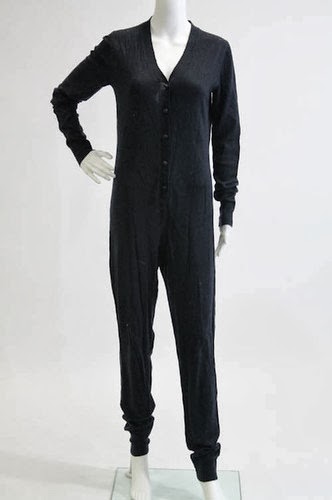
But where to find them?  The trend has been lightweight cotton or silk pajamas for so long that I had to google around, looking for this set of pajamas:


I found them here on Ebay.com.  Reminds me of a pair of long woolen red underwear that a boyfriend once gave me for Christmas as a joke.  Except these cost less and are significantly better looking, to be honest.

The best part of this research?  According to researcher Shin, the beauty of her finding is that night clothes are easy to modify.  You can certainly change your pajamas a lot easier than you can alter your behavior, sleeping position or oh, well, your partner's behavior at night.  And maybe in doing so, you might get to great sleep!

Sunday, September 8, 2013

Time to Improve Your Sleep

Sleepless in... Seattle? And Spain. And Serbia. And Salt Lake City. And even San Diego. An international sleep study is in and shows we're struggling to shut our eyes and keep them shut. Americans are the most productive, successful and honored for their success people in the world. But among the rewards, sleep is missing from the list. In the first ever international sleep study by the National Sleep Foundation, researchers asked a variety of questions about different sleep patterns. They found the Japanese survive on the smallest amount of sleep per night: just six hours and 22 minutes. Here in the U.S., we weren't far behind. We sleep an average of six hours and 31 minutes per night. According to the NSF, we need seven to eight hours of nightly sleep, in order to avoid the damaging effects of sleep deprivation, such as increased risk of stroke, diabetes, and well, exhaustion.

Isn't it time we started to sleep better?  Recovering from insomnia is a process and may take some time, but it can be done.  


So try this sleep tip: make sure your room is very dark.  Blackout curtains are inexpensive and bonus: they are energy efficient, blocking the summer's hot rays of the sun and keeping in the heat in the winter.  Also turn off the "vampire" electricity devices.  Anything that is shining an LED light (like the clock shown above) or putting off heat to the touch is using energy.  And the bright ones may be keeping you awake.

Monday, August 26, 2013

What I Did on My Vacation

I've just returned from three weeks visiting my aging parents in the West.  Time is getting short for them and occasionally, I lose sleep worrying about their health and other issues.  But in addition to helping Dad pull weeds from his potatoes and fixing the kitchen overhead light for my Mother, I used the time to "fix" a few problems with my sleep.

You see, I know what I'm supposed to do, but like a lot of other people, I don't always accomplish it. 

For instance, I want to go to bed earlier, but I don't always.  And when I do go to bed, I got in the bad habit of (before I sorted all my sleep obstacles and organized them for all to read) of playing solitaire on an outdated PDA in order to lull my brain to sleep.   I rationalized at the time that it was "part of my regimen," when I knew darned well that the electronic screen was "anti-rest."  But it was a habit and darned hard to break.  Here's the little electronic device of doomed nights now...


It was not a good habit to have and a real struggle... until I went to Mom and Dad's house.  There, with the country air, early to bed habits of The Folks and of course, my PDA solitaire game on the opposite end of the country, I routed that nasty electronic device from my regimen.  I was able to rewrite and reorganize my sleep habit and come back from vacation, rested and refreshed, minus the bad habits that slow me down.

I do still struggle with my own sleep issues, but this one has now officially been eliminated.  And if I take care to make sure that the solitaire game is not allowed in bed ever again, I will sleep much better. 

So will you.  Lots to do, lots to do, a few things to stop doing on The Great Sleep Checklist.

Thursday, August 22, 2013

Sleep Tip: Familiarity Builds Sleep

I'm proving my own advice this month.

 I'm in the West, away from my usual Washington, DC location, visiting my aging parents. I came because there were issues with their health that I wanted to give personal focus to. I came for three weeks and with only a carry-on.

That means an unfamiliar bed (sleeping arrangements have changed in the years since I left home), a different time zone, and unusually longer hours as I take care of various issues and concerns. I've not slept much in the past several weeks, in spite of a deep satisfaction with my parents home and life.

It's wonderful being here. But I work and enjoy my parents all day, then try to catch up on some professional issues online at night.

The changes in my resting place, longer hours and exposure to electronic lights are taking their toll. I'll go home at the end of the week a happier, but tired daughter.


To start to restore my sleep, I'll start my familiar bed and known surroundings.  I'll miss my parents, but I am hoping I'll also sleep better knowing the way we've worked together to better their situation.

Sunday, August 4, 2013

The Great Sleep Checklist... on Radio

The Great Sleep Checklist was published about 3 weeks ago.  I thought "Whew!  It'll be such a relief to get it done, published on Kindle and then I can move on with my life."

I'm moving on, but how did I miss that people would want to talk about it?  I thought "Create a useful tool and make it available.  What's next?"  I have always enjoyed finishing my projects so that I could get things off my plate and move on to the next thing.  But it turns out that's not the way things go in publishing.  It turns out that sometimes, writing a book about something, even a short book, makes you "an expert."  Or so it would seem in modern life.

The upshot of this is that a WGN Radio producer contacted me this past week and asked me if I was available to answer questions about sleep disorders on the radio?  I was interested, but I'm not a "sleep disorder expert."  I'm a former insomniac who worked and organized her life in order to sleep better and is in a position now to discuss how I did that and how others can do that.  As soon as they understood that I couldn't really discuss apnea or snoring (other than yeah, it's going to keep you up), I was definitely game.

Host David Plier is a businessman who hosts the weekend show and frankly, is a great conversationalist.  He's friendly, knowledgeable and handles everything, including prank callers, with capable style and personality.  I felt very comfortable and confident that I was in good hands throughout the entire interview.

So here's the podcast of that event at 2 o'clock this morning on WGN.  They posted it for us.  I hope you like it and feel free to comment with any questions of your own about sleep issues.  But not sleep disorders.

Sleep well!