Wednesday, November 27, 2013

Give Thanks for Great Sleep

Tomorrow is Thanksgiving: time to come together with family and friends, give thanks and express gratitude for what you have (and sometimes what you don't have), and eat an unusually ornate meal.


Since most of us make a tradition of overeating (and regretting it) on this holiday, what can you do to lower the chances that you'll over-indulge and feel uncomfortable, both physically and mentally?  Get a good night's sleep.

Why?  Because surveys show people who are under-tired, are more likely to overeat.   Maybe we overeat because we're so tired that we think we need a little comfort, or perhaps we do it because exhaustion doesn't help us make good decisions.  For whatever reason, we eat more when tired.  And very few of us are going to get exercise, beyond a light game of touch football (or hoisting feet on the ottoman for football on TV after the meal).

Sleep will help you get through the meal preparation, whether that's actual cooking or helping keep other guests out of the cook's way.  It helps keep people on an even keel, which is often tough to do on these big family occasions. It's important to everyone's well-being.  We all know that.

Even better news, it is the best time of the year to get a good night's sleep.  Summer's heat has gone.  The worst worries about "what am I waking up to" are yet to come.   The rain and, in some cases soggy snow, always seem to help me sleep in a way that bitter cold does not.

So remember the basics: go to bed at the same time every night.  Sleep in a cool, dark room.  Turn off the tech at least an hour (two is better) before you turn in.  Sleep on a good mattress.  Check those pillows to see if they need replacing.  Oh!  We'll talk about that next time!

Thursday, October 17, 2013

Can the Right Pajamas Help You Sleep?

What do you wear to bed?  I think for most of us, the nightwear depends on what sort of bedtime activity we're expecting.

Seems obvious, doesn't it?  Going to bed for other than sleep?  We all know that makes for more exciting sleepwear.  Or none.  New partner?  Very exciting.  Long-time couple?  Very exciting, too, if it's a big occasion.  Otherwise, you've probably developed your own style and tastes that are known.

But what type of pajamas would help you enhance sleep: a flannel nightie, the favorite t-shirt and shorts, a sweet cotton cammi-set or nothing at all?  Get set for a surprise, because if you're like me, this was not what came to mind.

According to a new study being presented today in Australia, pajamas made of a light wool are best for a sound, deep and longer sleep.  You weren't expecting that one, were you?  Turns out they have problems sleeping down under, as well.

The choices reviewed by the researcher were cotton, synthetic material, lightweight wool and nude.

Sydney University's Mirim Shin found people fall sleep and stay asleep best in light-weight, long-sleeved wool nightclothes.  Shin said such pajamas have better insulation and absorption qualities than cotton.

Why would you need such insulation?  The research also found an ambient temperature of 17 degrees Celsius (62 degrees Fahrenheit) was better than 22 C (72 F) which is where I sleep best.  Although I haven't actually tried the lower temp.   I might just give that a try this winter.

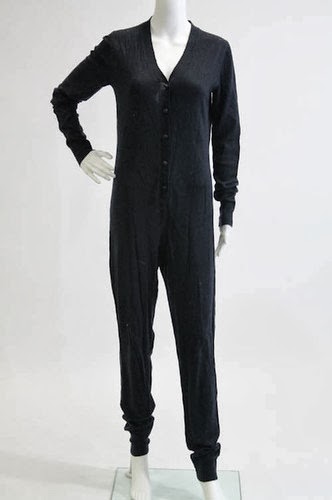
But where to find them?  The trend has been lightweight cotton or silk pajamas for so long that I had to google around, looking for this set of pajamas:


I found them here on Ebay.com.  Reminds me of a pair of long woolen red underwear that a boyfriend once gave me for Christmas as a joke.  Except these cost less and are significantly better looking, to be honest.

The best part of this research?  According to researcher Shin, the beauty of her finding is that night clothes are easy to modify.  You can certainly change your pajamas a lot easier than you can alter your behavior, sleeping position or oh, well, your partner's behavior at night.  And maybe in doing so, you might get to great sleep!

Tuesday, October 8, 2013

Sleep: How Much Is Too Much?

You're reading this at 2 or 3 o'clock in the morning, as your having "one of those" difficult times, aren't you?  So at this point, you probably can't imagine the possibility of getting too much sleep.  But it can happen and it also has negative health effects.

The federal government's Centers for Disease Control and Prevention just released a new study on our favorite topic, sleep, in the October issue of the journal Sleep, showing that in fact, too much sleep has health consequences.  But here's the surprise: the 

Too little sleep and you're groggy, mentally absent, struggling to take care of your physical needs of exercise and generally grumpy.  That's the easy stuff.

You're also at risk for coronary heart disease, stroke, diabetes, obesity and mental distress.  Sounds like a description of the ills of modern life, doesn't it?

To get their results, CDC researchers examined data on more than 54,000 people ages 45 and above in 14 states.  They found the vast majority (65%) were "optimal sleepers," getting 6 to 9 hours of sleep per night.  About one third (31%) were "short sleepers," getting 6 hours or less per night.  Only a small percentage (4%) were "long sleepers" who slept an average of 10 hours or more per night.  No surprises there, right?

We already know what happens to the short sleepers: stressed out, heart and blood pressure issues, "Little Mr. Cranky Pants" at the office.  But what is surprising is, they found the same chronic illnesses among the "long sleepers," except links with coronary heart disease, stroke and diabetes were even stronger.

Dr. M. Safwan Badr, president of the American Academy of Sleep Medicine (AASM), says the evidence is clear:

"Sleeping longer doesn't necessarily mean you're sleeping well."

He says people should understand that sleep affects health: a healthy, balanced lifestyle is not just about following a good diet and staying fit, but also getting the right quantity and quality of sleep.

Study co-author Dr. Janet B. Croft, a senior chronic disease epidemiologist in the Division of Population Health at the CDC, recommends doctors looking after chronically ill people begin with questions, regarding their mental health, body weight and sleep patterns and quality.

Have you noticed any of these issues in your life, as you deal with your sleeping patterns? 

Sunday, September 8, 2013

Time to Improve Your Sleep

Sleepless in... Seattle? And Spain. And Serbia. And Salt Lake City. And even San Diego. An international sleep study is in and shows we're struggling to shut our eyes and keep them shut. Americans are the most productive, successful and honored for their success people in the world. But among the rewards, sleep is missing from the list. In the first ever international sleep study by the National Sleep Foundation, researchers asked a variety of questions about different sleep patterns. They found the Japanese survive on the smallest amount of sleep per night: just six hours and 22 minutes. Here in the U.S., we weren't far behind. We sleep an average of six hours and 31 minutes per night. According to the NSF, we need seven to eight hours of nightly sleep, in order to avoid the damaging effects of sleep deprivation, such as increased risk of stroke, diabetes, and well, exhaustion.

Isn't it time we started to sleep better?  Recovering from insomnia is a process and may take some time, but it can be done.  


So try this sleep tip: make sure your room is very dark.  Blackout curtains are inexpensive and bonus: they are energy efficient, blocking the summer's hot rays of the sun and keeping in the heat in the winter.  Also turn off the "vampire" electricity devices.  Anything that is shining an LED light (like the clock shown above) or putting off heat to the touch is using energy.  And the bright ones may be keeping you awake.

Tuesday, August 27, 2013

Why A "Checklist?"

Why did I write The Great Sleep Checklist?  Why does it take a checklist to restore sleep?  Why won't sleep happen if you follow a few tips?

I wrote the Checklist after spending my life trying desperately to get a good night's sleep.  Sure, there were periods (months at a time, matter of fact!) when I slept well.  I worked hard, played hard and fell into bed at night and experienced blissful nights of slumber. 

But there were other times, when I worked equally hard and enjoyed myself every bit as much, yet could not put my head and my pillow together for anything but what seemed like an eight hour battle.  It seemed no matter how hard I tried, I couldn't get a restful night.

I finally realized that a lot of little things were keeping me from sleeping.  These were things that could be avoided.  And if I wanted to get to sleep, I'd better get started on knocking them out ofmy life.

Further, I realized that if I wanted to fall asleep, stay asleep and have very restful sleep, I was going to have to do more than just eliminate the obstacles and things that were preventing my sleep.  I was also going to have to start doing some other things to "smooth out the kinks" that kept me from the really great, restful and deeply satisfying sleep that I wanted.

The Great Sleep Checklist is a concisely compiled list of all the things that I changed to start sleeping better, and a few that I didn't have to bother with.  It's all the tips I saw on the internet, all the things that I found helpful, a few others that I could see were helpful (but didn't personally experience) and the ways I found to "boost" my chances of a good night's sleep.

Next time, we'll talk about one of my more controversial "strategies" for sleep and why it works.  Because you need a checklist to get back to sleep.  And you need a strategy to get GREAT sleep.

Monday, August 26, 2013

What I Did on My Vacation

I've just returned from three weeks visiting my aging parents in the West.  Time is getting short for them and occasionally, I lose sleep worrying about their health and other issues.  But in addition to helping Dad pull weeds from his potatoes and fixing the kitchen overhead light for my Mother, I used the time to "fix" a few problems with my sleep.

You see, I know what I'm supposed to do, but like a lot of other people, I don't always accomplish it. 

For instance, I want to go to bed earlier, but I don't always.  And when I do go to bed, I got in the bad habit of (before I sorted all my sleep obstacles and organized them for all to read) of playing solitaire on an outdated PDA in order to lull my brain to sleep.   I rationalized at the time that it was "part of my regimen," when I knew darned well that the electronic screen was "anti-rest."  But it was a habit and darned hard to break.  Here's the little electronic device of doomed nights now...


It was not a good habit to have and a real struggle... until I went to Mom and Dad's house.  There, with the country air, early to bed habits of The Folks and of course, my PDA solitaire game on the opposite end of the country, I routed that nasty electronic device from my regimen.  I was able to rewrite and reorganize my sleep habit and come back from vacation, rested and refreshed, minus the bad habits that slow me down.

I do still struggle with my own sleep issues, but this one has now officially been eliminated.  And if I take care to make sure that the solitaire game is not allowed in bed ever again, I will sleep much better. 

So will you.  Lots to do, lots to do, a few things to stop doing on The Great Sleep Checklist.

Thursday, August 22, 2013

Sleep Tip: Familiarity Builds Sleep

I'm proving my own advice this month.

 I'm in the West, away from my usual Washington, DC location, visiting my aging parents. I came because there were issues with their health that I wanted to give personal focus to. I came for three weeks and with only a carry-on.

That means an unfamiliar bed (sleeping arrangements have changed in the years since I left home), a different time zone, and unusually longer hours as I take care of various issues and concerns. I've not slept much in the past several weeks, in spite of a deep satisfaction with my parents home and life.

It's wonderful being here. But I work and enjoy my parents all day, then try to catch up on some professional issues online at night.

The changes in my resting place, longer hours and exposure to electronic lights are taking their toll. I'll go home at the end of the week a happier, but tired daughter.


To start to restore my sleep, I'll start my familiar bed and known surroundings.  I'll miss my parents, but I am hoping I'll also sleep better knowing the way we've worked together to better their situation.